

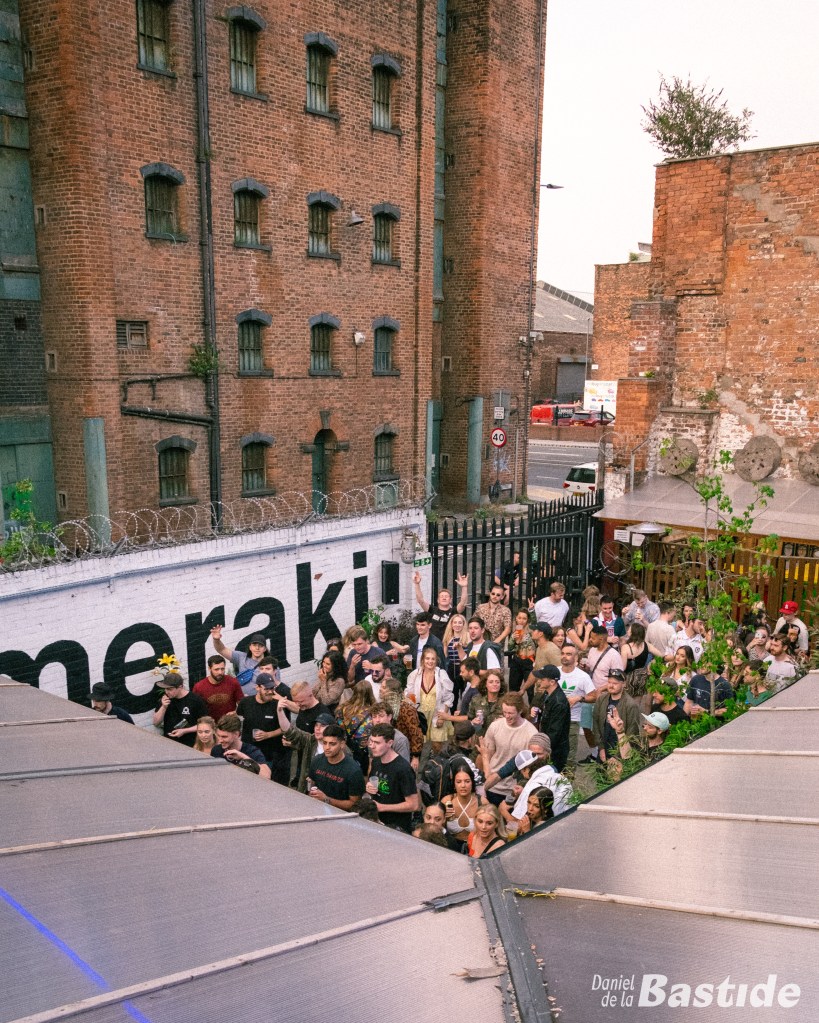
When I arrived in Liverpool, I hadn’t heard of meraki. It wasn’t until the Christmas of 2019 that I remember that its name started floating about. Lots of my friends were going down to this venue on the docks and having an unreal time. (I can testify that – after being given access to the RRR photo archives where I was delighted to stumble across picture evidence of such occasions – they certainly were having an unreal time). Sadly, before I got a chance to head down myself, COVID hit and that was that.
Fast-forward to almost exactly 2 years, and that brings us to now. When Max and Joe asked if I could speak to George Griffin, one of the directors at meraki, I jumped at the chance. RRR host so many of our events at meraki, I am a big fan of their ethos and, being the nerd I am, I also love their branding. But most importantly, and for the same reason as why I intern at RRR, you can’t tell me what isn’t inspiring about young people doing something good in an industry where there’s a lot of not-so-good?!
I’m particularly proud of this interview. Talking to George was a pleasure, visiting meraki was a pleasure (despite the wind and rain), and diving into some of the pressing issues that music venues are having to address, such as diversity issues and spiking incidents. Voicing these matters and giving them a platform to do that is a key starting point (and I emphasise starting point!), to making positive change. A big shout out to meraki, and to RRR for doing this. Please do check out RRR’s DJ workshops for underrepresented genders in the music industry and apply. Cheers to making change, enough of my wittering. Let’s get into the interview!

How did you get involved in the music industry?
I started working at Buyers Club in my second year of university, about 6 years ago now. Directly above the Buyers bar was a venue. It’s not there anymore…the venue shut on New Year’s Eve of 2018. But anyway, one of my mates Remy used to work in the venue, and when he left, I applied and took over. I didn’t have a clue what I was doing, but I learnt everything about venues in those two years. I continued working on the bar after it shut, and only just left this year!
So, when did meraki come about?
Well, it’s the 5th birthday of meraki this month (November), and I’ve been around for about 3 years. (Yeah, I was trying to do both jobs full time for a few years, which was a lot!). One of the guest sound engineers at Buyers kept mentioning meraki to me. To be honest with you, all I used to do was slate it, and tell him how rubbish it was… because it was rubbish. Just a year and a half ago it was a yard, all of the inside walls were white, the bar was a hatch in the wall. It needed so much doing to it. I kept saying “you should do this, you should do that” and when one of the directors left, my mate said I should take the job, and I quote “because he knows everything that is rubbish about it so he will come and sort it out.”
So, you started and then what?
I started as director and was here for about a year and then lockdown happened. It was gutting. Just before lockdown it was so busy, everything was selling out! Then, for a while everything just disappeared. Saying that, on the other side of lockdown, it has definitely been a blessing in disguise; we obviously had the very first lockdown which was the “you stay in your house for 5 weeks” and we did nothing because we didn’t have a choice. Following that, I said that I needed to go in because I was seriously losing it. Luckily that was at the same time the government said that if you can’t work from home, then you can go in. So, I came in, and we built all of the outside area ourselves, apart from the roof.
How was COVID… did you guys get much support?
Our landlord is a sound guy. During covid we didn’t have to pay rent for months, which was great, it meant we could do loads of work on the outdoor space and make it as good as it is now. With actual COVID funding, we got a couple of local grants, and the culture recovery fund grant, and we helped other creators with funding too. We had about 15 businesses get in touch, which was amazing. There’s 17 of us to look after, it was definitely a tough time.
Have you noticed any change coming out on the other side of the pandemic, or not really?
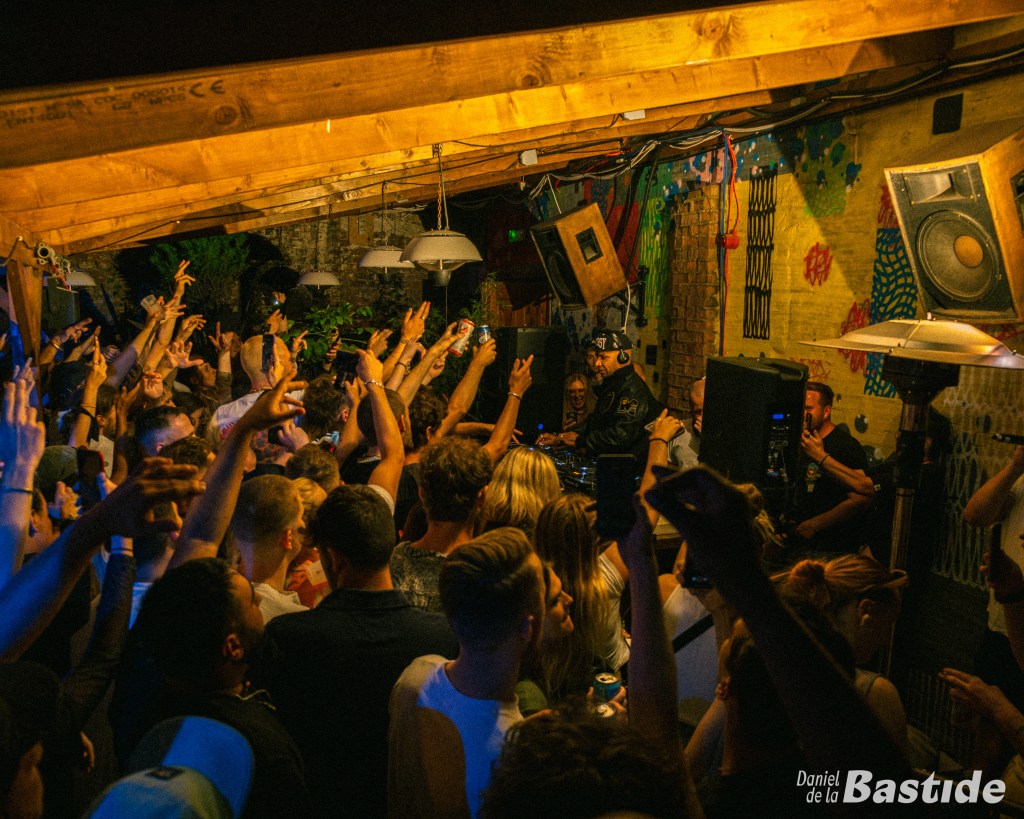
As I’ve said, it was especially tough because business was booming, and then lockdown happened. It’s interesting, as post-Covid, we are finding that different events are selling out than those that we expected to sell out, and certain stuff I expect to do really well just isn’t performing.
Why do you think that is?
There’s a year and a half’s worth of students who knew the venue and have left Liverpool and as such, they’ve not been here to ‘pass it down’ to the new students. There are new students who don’t know what on earth meraki is, what underground dance music is… or the fact that a space like this even exists. Like, yes! Other things exist outside of concert square!
Covid destroyed word of mouth. Then there’s the overarching theme of women not feeling safe. Some acts that we booked have been rescheduled from 2 years ago, and so less people have been engaged with them due to inactivity over lockdown… that’s a thing. There are less people going out in general anyway, because everyone’s been grounded for so long. People don’t want to spend as much money.
So, do you have a completely different crowd now?
A lot of our crowd are still students, but there’s also lots of young professionals and creatives. Liverpool has an issue with retaining its post-education students. Why would I stay in Liverpool if I can go to Manchester or London where I’m way more likely to get a job? Liverpool just doesn’t have the same infrastructure that those bigger cities have. I’m just hoping that – come next term onwards – we’ve had the time for people to catch up.
Does the Ten Streets project help you guys with getting a crowd in, or with anything otherwise?
We are part of the 10 streets project, with others like Invisible Wind and North Shore. After the council messed up with Baltic, their aim is to have this as the new creative quarter. But it is a really long-term plan… it will take 20 years or so. Liverpool City Council have adopted an agent of change principle, so hopefully what happened in Baltic with developers won’t happen to us!
Diversity is a big thing for you guys. Can you tell me a bit more about that?
For meraki, we generate separate reports for in-house programming and external programming. It’s interesting to look at the difference of in-house shows and external shows. In the first year we were aware of the statistics, but we weren’t making a huge effort. When we chose to make a conscious effort – as we should have – it was doubly hard because of restrictions. We couldn’t really book anyone outside of the city, there are nowhere nearly as many female DJs as male DJS. For every female DJ there is probably 30 lads. Now that we have opened up more, we will be able to give opportunities to those that need the exposure. With external promoters, within the contracts that they sign to hire the venue, it is stipulated that they need to make an effort with diversity in their line-up.
Do you hold them to it?
If it’s a first-time promoter, there is more leeway, but if they do another night and have the same issue, then there’s a conversation… if they want to use meraki again, they need to book people who aren’t just white men. The people that are confused by this don’t come back. We are fortunate enough to be in a position where we can just put someone else on, who has a better line up, which is more diverse. Sure, it may not be our event, but it’s in our venue, and so it still represents meraki.
How does that sit with promoters?
God, we had one promoter once who said “What do you mean mate? There’s no women in techno, our line-up is diverse… my mate is ginger….”. It’s literally a joke. And our response is that they aren’t coming into our venue. How do you think that women are going to be comfortable coming into a venue that is male dominated? F*** that! If you don’t make the effort to change it at a grassroots level, and show people that it can be done, and that maybe you have given that one woman in the crowd the confidence to say, “I can do that because I can see 3 women doing it”. If you don’t make the effort to do that in the first place, then nothing is ever going to change.
What’s your stance since the recent spiking incidents?
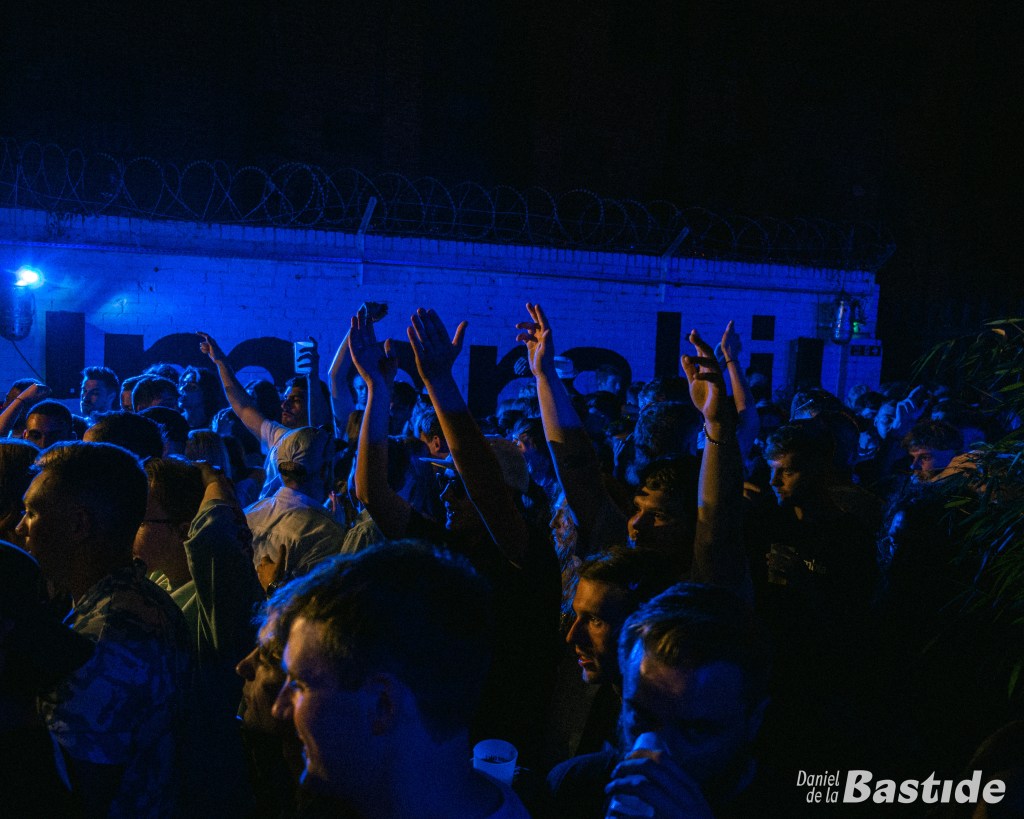
Spiking shouldn’t happen anywhere, but yeah, it’s true, it’s much less likely to happen in grassroots venues, than in Concert Square. This has been a conversation in the office for the past few weeks. Sadly, there’s no definitive way of stopping it – people can smuggle drugs in their underwear. There’s no way of stopping that. We can monitor people as much as we can but then we have to achieve a balance with that. We want people to come here and feel like they’re in a space where they can do whatever they want within this framework. You don’t want 10 bouncers in your club standing over you dancing!
As well as that, from a financial point of view, it simply isn’t viable. Doormen are so expensive. We can’t afford to do that… Level can do that. Hiring more bouncers is like saying “Let’s solve crime by putting more police on the streets.” That’s not how it works. It’s the same thing with Sarah Everard, Sabina Nessa, amongst so many others. This is not solved with more police, it’s solved by educating young men and boys. You don’t have possession over women – that comes from education.
So, your stance in a nutshell is…?
Men are targeting women through spiking. We can do our bit to reduce that as much as we can and if anything like that happens, that person is immediately removed from the venue and they’re not coming back ever again. That’s a large portion of what we can do. We also have a taxi scheme and a zero-tolerance policy. If we ever have a situation, where people are too gone, they get sat down and given water and time to sober up – unless they’re violent, then they’ll get kicked out. We always make sure to look after that person and not throw them onto the street in the middle of nowhere.
We have posters in the toilets about sexual misconduct, saying “we want you to have a good night, if anything makes you uncomfortable, let us know. We believe you.” Something as small as that may have a big impact. We will always do things like that.
How did you meet Max and Joe and get involved with RRR?
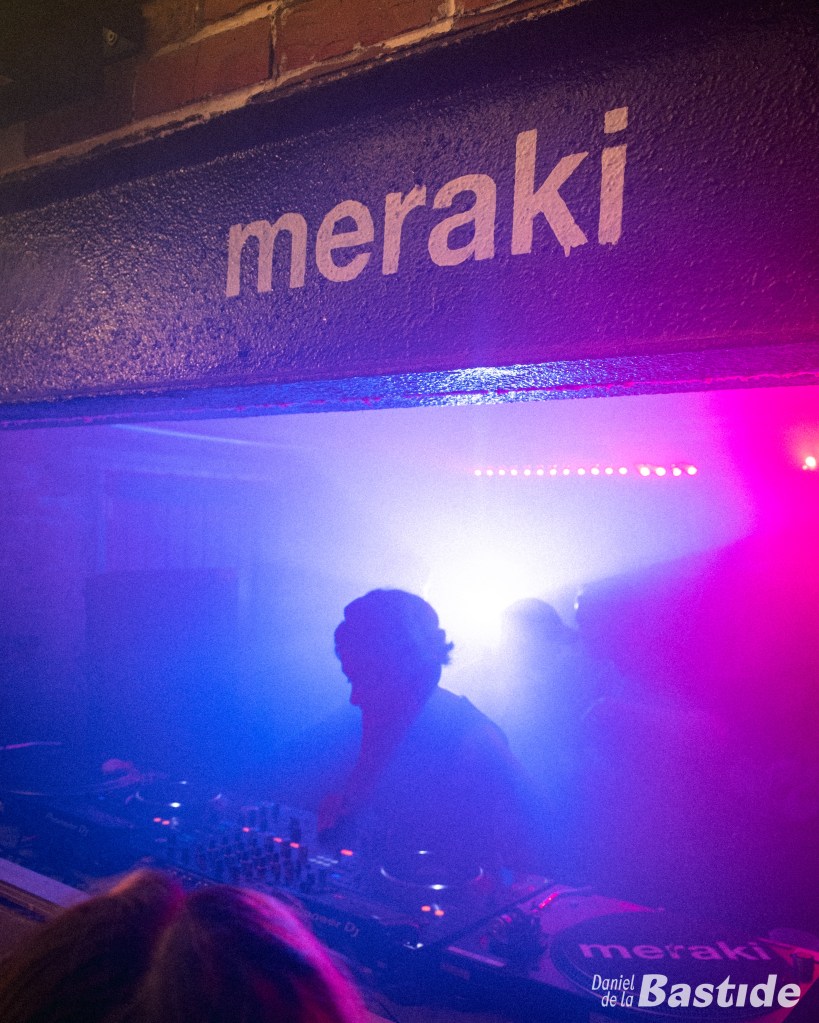
Joe and Max knew Jack (another director) before me because he used to work at Kitchen Street. Jack did an event with them – The Yard Party. Then they did their launch party here three or four years ago. I wasn’t here at that point, but I’ve got to know them since I joined, what with them doing parties and events here. They had an event here last week; they hire the venue; they bring the DJs.
Do you find that the events that work best and that sell out, are put on by young people?
It’s just people with good ideas, you know. And doing something slightly different, even if it’s down the normal track, but skewing a little bit off that straight line. Obviously, there’s the people that put on the same old thing… the ticket sales reflect that. If you do something boring, if you have 6 white men on the line up…that’s not extraordinary, that’s not going to sell out. Joe and Max are also working on more diverse line-ups which is cool.
What have you found interesting working within sound system culture?
When you look at the crowd and it’s mainly just white people you have to think, why is that the case when Liverpool has one of the oldest black communities in Europe? Sound system culture is inherently stems from black culture. It used to be such a big thing here and it baffles me that it isn’t anymore. On Princes Avenue Boulevard, there’s plaques on the history, and one of them talks about the music venues along the Avenue and into the Georgian Quarter. There used to be 8 or 9 clubs just on Princes Avenue! West Africa etc… the buildings still exist and a lot of them still have the signs on. Anyway, I’m not particularly well versed in talking about this slice of local history, historians like Laurence Westgaph will serve you much better on that side of things.
Do you have any long-term projects?
To be honest, the main thing has been doing the venue up. None of us come from money, we don’t have loads to throw at it. The whole place was started on an arts fund, which is why it’s taken so long to get to a place where it looks good. I guess, long term, outside of us being a venue, is to properly open this outdoor space as a bar in the summer. From next Spring, we will be look at launching the space under the meraki brand, but not crossing over. The people that come here to dance until 5am are not the same people that want to come and sit in the garden on a Saturday afternoon and just chill out. It’s really nice, actually. There is now enough stuff in the area, that people can come on a Saturday afternoon and be entertained. There are at least three or four places that will be open. And what’s not to like? You’re surrounded by plants, a decent sound system, a bit of sun if we’re lucky. The space works, the bar is sound. It will work when that happens, it’s just getting people down here. But yeah, that’s the next big thing.
Anything else at all to shout about before we wrap it up?
On Sundays there’s a market run by the ‘Not Your Babe Collective’. There are 17 stalls inside, and they are all female-owned businesses. This space can do so much more. We are working to make people aware of the space and the fact that it exists. For example, Jacinta is starting female and non-binary DJ workshops down here. That’s some cool stuff that we want to see more of.

 rumriddimzrun.com